On Friday, July 20th my friend Maggie and I traveled to the Caribbean coast where we enjoyed three days of exploring the city of Cartagena. Aside from a few inopportune rain storms, we had a great time basking under the Caribbean sun, wandering around Cartagena's charming colonial streets, dining at top-notch restaurants, and taking day trips to nearby tourist destinations. We especially enjoyed our excursions to the nearby "Islas del Rosario" and the very unusual "mud volcano."
We arrived to sunny Cartagena on Friday morning and spent the rest of the day exploring the Popa Convent, San Felipe Castle, and the fortress-like "old city" of Cartagena . In the afternoon we had an incredible meal at an authentic Spanish-style restaurant called "El Burlador de Sevilla" and had dinner at an Argentinian pizza place later that evening. We wrapped up our first night in Cartagena with cocktails at the posh Santa Clara Hotel.
A visit to the "mud volcano" On Saturday morning we woke up early and took a tour of a nearby "mud volcano." There we covered ourselves from head to toe in thick, gray mud and enjoyed the "services" of local "massage therapists." Following our massages, we were instructed to walk down a dirt path to a smelly lagoon where local women washed the mud off our mud-caked bodies and swimsuits. Sounds weird, right? Well, it was! It was certainly one of the most unusual (and unforgettable) experiences that I have ever had. Later that night we treated ourselves to "arequipe" ice cream and had a delicious meal at the super-chic Santísimo Restaurant.
 Islas del Rosario
On Sunday morning we went to the Cartagena harbor and took a boat to the Cocoliso Resort, located about two hours southwest of Cartagena on one of the 27 Rosario Islands (Islas del Rosario). Unfortunately, it stormed during the 2-hour trip there and cleared up only a couple of hours before we had to return to Cartagena. However, before leaving the island I was able to enjoy a quick swim in the Caribbean and snap a few pictures of flowers, coconuts, and of me and Maggie dressed as pirates! And fortunately, clear blue skies made for an absolutely beautiful trip back to Cartagena.
On Sunday night, Maggie and I were having dinner and decided to make a list of the some of the most memorable aspects of our trip to Cartagena. Just for fun we included both the best and the worst of our trip.
The best (and worst) of Cartagena
 Best Meal
+Appetizers of cured ham (jamón serrano) and manchego cheese followed by a grilled seafood platter. The restaurant was an authentic Spanish restaurant that reminded me of the time that I spent living in Spain. The entire experience, including the décor, the music, the smells emanating from the kitchen, and the perfectly prepared portions of shrimp, octopus, squid, clams, oysters, and lobster brought back fond memories of the food that I loved to eat when I was studying in Santiago de Compostela. Worst Meal
+Deep-fried chicken leg accompanied by a so-called salad of onions prepared in a hygienically "questionable" hut on the beach. (Maggie)
+Fried fish (shown in picture) from the same hygienically-challenged hut. (Aaron)
Disclaimer: The rice served with our chicken and fish was actually quite delicious. It is called "arroz con coco" or coconut rice and is a specialty of northern Colombia. The rice is prepared with shredded coconut and is cooked in coconut milk rather than water. I liked the fish (mojarra) too, but in comparison to the other five-star meals that we enjoyed in Cartagena, this one won the prize as the "worst meal." Best Dressed
+Maggie in her "slimming" red dress.Worst Dressed
+The plump woman wearing a thong bikini at the pool.
+Honorable mention: The plump elderly man wearing a thong bikini at the pool.
Note to readers: "Spandex is a privilege, not a right." - CamilleBest Picture
+Maggie (again) in her red dress (she likes this picture so that's why it gets two nods).Worst Picture
+The image that I have burned into my head of that man wearing a thong bikini. (Aaron)
Disclaimer: I made this part up. The guy was actually wearing a speedo, but I thought that it would be more funny if he were in a thong. Best Deal
+Once I had made the trek from the mud volcano down the dirt trail to the edge of the stinky lagoon, a friendly woman named Graciela took me by the hand and led me out into knee-deep water and told me to sit down. There my toothless helper washed my hair, face, ears, torso, legs, and feet. She then told me to take off my swimsuit. I was quite surprise and confused. "¿Qué? What is it that you want me to do?" Once I was sure that I had understood her correctly, I reluctantly did as she asked. Fortunately, she simply wanted to wash off my swimsuit. After a few minutes, Graciela finished scrubbing my suit and told me that I was completely clean and ready to go. Price: $1.00 (Aaron)
+Honorable Mention: One of our taxi drivers insisted on taking us around the old city of Cartagena and showing us the major sites. We thanked him for the offer but declined since we were already quite tired from a full day of sightseeing. Honestly, we just wanted to get back to our air-conditioned hotel to rest. Then he lowered his asking price from 5 to 3 dollars and continued to insist that we take him up on this once-in-a-lifetime offer. However, we were still unconvinced. After several minutes our driver finally gave up. In the end it turned out that the destinations that he was planning on taking us to were on the route to our hotel so we ended up getting the tour anyway! Price: Free
And finally,Worst Deal
+The 15-minute taxi ride to the Popa Convent. I think we got the "special" price for foreigners. Price: $20.00!
That's all for now. Be sure to check out the rest of my pictures from Cartagena!
Friday, July 27
The best (and worst) of Cartagena de las Indias

Wednesday, July 25
Remains of 25 individuals returned to their grieving families
 On Monday morning I woke up at 4 o'clock. And by five o'clock I had already showered, dressed, packed my suitcase, and started my three-hour journey from Cartagena along the Caribbean coast towards the city of Santa Marta. Under the cover of darkness, my taxi driver Roberto and I traveled along desolate highways past one slumbering village after another. And every few miles we came to heavily guarded military checkpoints and I was tempted to ask Roberto how safe the highways were at that time of the morning. In my head I wondered about the best way to ask the question. "Is it safe to be out here?" Or, "How do you feel about driving in the dark?" Or maybe, "Is this really a good idea?" After several minutes of formulating the question in my head I decided to just remain silent. I figured that he might not understand the point of my question. Or maybe I was just afraid to know the answer.
As the sun slowly began to rise we sped along in our air-conditioned Renault past farmers riding atop donkeys carrying produce to the market. We raced alongside sandy beaches and towering groves of palm trees and past silent fishermen as they paddled out to sea in their wooden canoes. My eyes felt heavy and my mind wandered to the ceremony that would take place in just a few hours.
So I picked up my pen and notepad and began writing down a few of my thoughts. I wrote some of the questions that I hoped to ask the family members attending this historic event. I wondered how best to ask about the deaths of their loved ones and the deeply personal significance of receiving their remains after so many years. I wanted to learn from their experiences but worried that my questions would be perceived as being insensitive, intrusive, or just simply inappropriate for such a solemn moment. I wondered about what I would ask...
So, where are you from? How was your trip? What do you do for a living? How long ago did your loved one die? How did it happen? Were you able to attend the exhumation? Would you have liked to attend if given the chance? Did the authorities help you to understand the exhumation process and how the remains would be identified? Do you feel safe enough to return to your community? Do you worry that participating in this event might affect the safety of your family? What's next for you and your family?
 At 8 o'clock we finally arrived to the majestic San Pedro de Alejandrino estate where the ceremony was set to begin an hour later. After changing into my suit and tie I sat under the big white tent and waited. There I started to talk with a some of those in attendance and I asked them a few of my questions. I met one young woman whose husband was killed by the paramilitaries when he was just 24 years old. She was pregnant when he was killed and she was left to care for their two-year-old son. Three days after his death, she packed up her belongings and headed to the city where she hoped to escape the violence. In the 10 years since that day, she has been too afraid to go back to her village.
I also met a very kind, elderly woman from Valledupar. She lost two of her sons in the war, one to the side of the guerrillas and the other to the paramilitaries. She told me how they were "such good boys" and "very hard working." Killed just days apart, they were 33 and 24 years old at the time of their deaths. Then I asked her about the psychological support she had received during the previous two days.
"During the workshops, the psychologist asked us if we carried hatred or bitterness in our hearts towards those who took away our loved ones. And to be honest, I don't hate anyone. Not even those who stole my sons. Of course, I would like to see justice. But even if justice is never served here on earth, I know that they will eventually have to answer to God. Just as God has forgiven me for my past wrongdoings, He has given me the ability to forgive them. I am just looking forward to the day when I see my sons again once we are in heaven. I don't hate anyone."
 "It was a difficult and painful ceremony," stated Colombian Vice President Francisco Santos Calderón when referring to Monday's special event where the remains of 25 individuals were returned to their families. "They were innocent victims, killed because they refused to choose sides between the guerrillas and paramilitaries." The Vice President urged those in attendance to "teach the rest of us how to achieve peace and reconciliation in Colombia because only you who have suffered such great injustice can truly understand what it means to forgive."
Of those whose remains were exhumed and identified, 16 were men (including one 13-year-old boy) and 9 were women. Each had been killed 10 years earlier by guerrillas or paramilitaries and were recovered from four different unmarked graves in 2006. This was the second such ceremony held in Colombia since exhumations began in 2006.
One father's quest for peace
 Today I was reading about Gustavo Moncayo, the father of a military officer captured by the FARC and held hostage by the guerrillas for the past 10 years. Accompanied by his daughter Tatiana, Moncayo has been walking across Colombia since mid-June in the hope of encouraging the government to reach a "humanitarian agreement" with the FARC. The agreement would imply the release of FARC prisoners in exchange for hostages held by the guerrillas. Here you can follow Gustavo's journey (in Spanish) and see pictures of his quest for peace.
The following story is from Gustavo's blog:
"Yesterday as we arrived to Chicoral, a man handed me a white dove. I took it into my hands and then I said a few words. The strange thing is that when I opened my hands to let it fly away, it just sat there without moving. I didn't want to move or bother the bird, but it eventually perched on my outstretched index finger. I gave the dove to Yuri to care for it. If I am not mistaken, a little girl ended up with it.
We did have a few problems upon arriving to Chicoral because there weren't places for us to sleep. Thanks to God and to the kindness of the Colombian people, a six-year old girl came out of nowhere and suggested that I stay in her house, in her room, and in her bed. It was there that I was reminded of how I used to dress Pablo Emilio and watch him sleep. I am feeling a deep pain in my body and the urge to cry.
I had better conclude by saying that we are close to Espinal and tomorrow we leave for Flandes. Step by step we will reach our goal: Freedom." (July 23)
The following story comes from Shadows of War by Carolyn Nordstom and is about an anonymous poem entitled "True Peace" that was found taped to a wall in London in 2001, the day after a bomb exploded outside the BBC building and tensions were escalating in Northern Ireland.
"There once was a King who offered a prize to the artist who would paint the best picture of peace. Many artists tried. The King looked at all the pictures, but there were only two he really liked and he had to choose between them.
One picture was a calm lake. The lake was a perfect mirror, for peaceful towering mountains were all around it. Overhead was a blue sky with fluffy white clouds. All who saw this picture thought it was a perfect picture of peace.
The other picture had mountains too. But they were rugged and bare. Above was an angry sky from which rain fell, and in which lighting played. Down the side of the mountain tumbled a foaming waterfall. This did not look peaceful at all. But when the King looked, he saw behind the waterfall a tiny bush growing in a crack in the rock. In the bush a mother bird had built her nest. There, in the midst of the rush of angry water, sat the mother bird on her nest.
The King chose the second picture as the winner. "Because," explained the King, "peace does not mean to be in a place where there is no noise, trouble, or hard-work. Peace means to be in the midst of all those things and still be calm in your heart. That is the real meaning of peace."
 This story reminds me of Gustavo Moncayo, the dove that refused to fly away, and the six-year old girl who offered to give up her bed to a complete stranger. It causes me to reflect on "peace" and how it is not spontaneously achieved at the moment of negotiating an end to hostilities, but is instead slowly cultivated through the simple acts of individuals working to create something positive in the midst of all the "noise" and "trouble." I am encouraged because despite finding themselves in the midst of a decades-long war, many brave and committed Colombian people like Gustavo Moncayo are working hard to build peace and a better future for their children.
I will conclude with this excerpt from Shadows of War:
Peace is not the resting pulse of humanity, reestablished the moment a peace accord comes into being. It is the pulse of humanity- but it does not rest: it is wild, erratic, fragile, sweet, and too often elusive. Peace is not merely the absence of formal war. It is a child free from the hungers of the twenty-first century; a woman free from fear of assault from either friend or foe; a man who no longer has to look with confusion at where his leg was just a moment before he unwittingly stepped on a land mine.
Peace does not wait for the end of war to make its debut. It takes its greatest definition on the front lines. As one war orphan living on the street told me during the years of war in Angola: I carry a little bit of peace in my heart wherever I go, and I take it out at night and look at it. Peace starts in the trader walking across the front lines to carry critical necessities to a town under siege; it starts in the teacher holding classes outside the bombed-out schoolhouse even though teachers are being targeted for attack; it starts in the songs and paintings of artists who envision ways to end the war; it starts in the belief for a better tomorrow amidst an unbearable today.
Photos from Camino de la Paz
Thursday, July 19
A quick trip to Santa Marta
 On Sunday afternoon, I will take a two-hour taxi ride from Cartagena northeast along the Caribbean coast to the city of Santa Marta. There I will be observing a ceremony that I have been helping to plan for the past several weeks. In addition to the families attending this funeral-like event, there will be several VIPs in attendance, including the Colombian vice president and several generals from the armed forces. Next week I will write more about my experiences at this historic event.
After the event on Monday morning, I hope to take a quick walking tour of Santa Marta before boarding my flight back to Bogota. Here is what one traveler says about Santa Marta on World66:
"You shouldn’t miss Santa Marta. There are so many reasons to come here: to relax, because the area has great beaches, to visit the oldest town of Colombia (founded in 1525!) or to explore the ancient culture of the Tayronas, who lived in the area before the Spanish came. The Ciudad Perdida or lost city of the Tayronas can be visited in a 5 day trek through a national park. This will be an experience you will never forget.
Santa Marta is also a very lively place with good nightlife. The clubs near the beach attract a colourful crowd.
Santa Marta is relatively secure. Crime rates are low and its streets are clean. El Rodadero (shown above) is the main touristic area. A place full of high-rises, shops, and cafés. The Annual Festival del Mar, or Festival of The Sea, brings many people.
Also, be sure to visit the Tomb of Simon Bolivar, El Libertador, alongside a wonderful art museum."
A seaside getaway: Cartagena de las Indias
 On Friday morning, I will take advantage of the long weekend attributed to Colombia's Independence Day (July 20) by traveling to Cartagena, the "Jewel of the Caribbean." I will take an early morning flight to this Spanish colonial city celebrated for its beautiful beaches and old world architecture. Here's what they say about Cartagena on World66.
"With just under 1 million inhabitants, Cartagena is the most popular tourist resort town in Colombia. It is divided into two main parts: the Ciudad Antigua (Old City) and the Ciudad Nueva (New City). Cartagena used to be a popular place for the privateers of the Caribbean (the most famous being Sir Francis Drake). Accordingly, the Spanish invested heavily in thick walls to protect this important harbour from attacks.
The walls are over 10km long and enclose the pleasant Ciudad Antigua, built in 1533 along a beautiful Caribbean harbor. It’s very pleasant to stroll down the narrow streets and take in the stylish colonial architecture. The cathedrals and palaces face cool shady plazas, where you can buy little cups of coffee (tinto) and watch the world go by. Around Cartagena some very fine beaches are to be found, where you can get a tan under the tropical sun.
Nightlife in Cartagena is quite lively, as there are a number of bars with good (Salsa) music and cheap beer. Finding a decent place to eat is never difficult, and restaurants specialize in Caribbean and creole dishes.
From Cartagena you can travel on to Bogotá, Cali, Medellín, and Santa Marta, a great old city on the coast, from which you can visit the Ciudad Perdida of the Tayrona Indians."
Photo by Carlos Hoyos
Wednesday, July 18
Green jacuzzis and fancy-pants spa treatments
 Last Saturday afternoon, I hopped on a bus to Paipa with nothing but a dance belt and a tube of chapstick. Just kidding. But I did take my backpack and traveled to this small town located approxiately 3 1/2 hours north of Bogota. Along with three of my friends, we traveled in search of Paipa's reputable hot springs and relaxing atmosphere. Once we arrived to Paipa, we climbed into a taxi which would take us the final five kilometers to our hotel. However, moments after speeding off in the taxi we found ourselves stuck behind a slow-moving caravan of semi-trucks. Apparently they were celebrating the holiday of some virgin that is supposedly the patron saint of truck drivers. Who knew that there even was a patron saint of truck drivers?!
Well, when we finally arrived to Hotel Paipa which is situated on the banks of Lake Sochagota, I was pleasantly surprised to learn that Maggie had booked us all in what appeared to be a five-star hotel. (She really knows how to pick the lodgings!) The remainder of the evening was spent enjoying dinner in the hotel restaurant and later admiring (from a distance) the greenish-colored Jacuzzis that looked more like churning cauldrons of vegetable beef stew. Let's just say that the large clumps of hair and numerous water-logged insects floating face down in the green water didn't enhance the "charm" of this otherwise luxurious hotel. On Sunday, me and the gang trekked down to the hotel spa where we enjoyed an hour-long full-body massage that included us getting covered from head-to-toe in mud, lathered up with oil, and intermittent layovers in the sauna and hot showers. Yeah, I know that getting a fancy-pants massage at a spa isn't considered to be very "manly," but I still have to admit that it was quite relaxing.
In the end, perhaps the most memorable part of our little excursion to Paipa was the mud massage and the sight of that overly affectionate couple that just never seemed to leave the green Jacuzzis.
Photos by Paipa Hotel
Friday, July 13
Best (and worst) snack
 This is bocadillo and it might just be the most delicious snack ever invented. It is a typical Colombia sweet make from panela (sugar cane) and guava paste and comes nicely wrapped in banana leaves. The taste of bocadillo is very sweet and the texture reminds me of the fruit roll-ups that my mom would put in my lunch as a kid. Aaah, the memories.
However, besides the obvious hazard of overindulgence, bocadillo is also perhaps the worst snack ever, or at least when there are tiny, black beatles crawling around inside the banana leaf wrapper. That happened to me the other day and the unpleasant experience ruined what had previously been a happy love-affair with this Colombian confection.
Dining out in Bogota
La Hamburguesería On Sunday, several of us got together for burgers at La Hamburguesería in the Parque de la 93 in honor of the 4th of July. I brought my friend Sofía and Maggie brought along Paula ("the crazy Spaniard") and her friend María Victoria ("the quiet human rights lawyer"), Shane ("that nice guy from New Jersey"), Ivan ("the man"), a mother and daughter duo ("las artistas"), and Liz ("Cali girl"). Paula was super hungry and I was worried that she might eat the waitress. Maggie made sure that she didn't. And María Victoria reminded us that eating the waitress would be a grave violation of international human rights law.
Juan Valdez versus Starbucks After downing our burgers we wandered over to Juan Valdez Café, a favorite "watering hole" of ours in the Parque 93. Juan Valdéz is a ubiquitous coffee chain that makes a mean "café con leche." While this chain is Colombia's answer to Starbucks, I just don't see them overtaking Starbucks anytime soon. I mean, just look at the sizes of their drinks. At Starbucks, the sizes are Tall (12 oz.), Grande (16 oz.) and Venti (20 oz.). In contrast, the sizes at Juan Valdez are Pequeño (7 oz.), Mediano (9 oz.), and Grande (12 oz.). To maintain his or her daily intake of caffeine, a Starbucks addict would likely go crazy if suddenly transplanted in the land of Juan Valdez.
Tuesday, July 10
Video: Climbing Monserrate
On Saturday, my fearless friend Maggie and I hiked up Monserrate. Here you can watch a video of our adventure.
Thursday, July 5
Video: A call for peace and freedom
 While the number of kidappings each year in Colombia has greatly declined in the past few years, today at 12 o'clock the country came to a standstill as over a million people flooded the streets to demand an end to the armed conflict and freedom for the men, women, and children that are still being held hostage by the FARC and other illegal armed groups. There are currently more than 3,000 individuals held in captivity, including some for over nine years.
These demonstrations are the largest since October 1999 when an estimated 5 million Colombians joined in a nationwide protest against violence and kidnappings. While these marches are considered smaller than the events of 1999, others point out that Colombia has never experienced such a widespread and inspiring call for peace since they have successfully mobilized the citizens of not only Bogota but of every major city and town of Colombia.
"This march is by the people of Colombia against violence and against indifference," said Fabiola Perdomo, the widow of one of the 11 local politicians killed by the FARC in June. "The armed groups, the government, the rebels, must look for another solution apart from more war."
Here is a video that I put together of today's demonstrations in northern Bogota.
The calls for peace have begun
 Today is considered by many to be a historic day for Colombia in its struggle to overcome violence. At noon, millions of Colombians will raise their voices, drivers will honk their horns, and churches will ring their bells in unison to demand peace and the release of individuals currently held hostage by guerrillas and paramilitaries.
Massive demonstrations, parades, and vigils are planned in cities across the country. In Bogotá, citizens will form human chains, clogging Bogota’s main transportation routes. In Cali, the mayor has called on every citizen to don white clothing and to carry white lilies as they head to the streets. In Medellín, the mayor has called on the citizens to their everyday activities and join together in making as much noise as possible, using any means necessary including the banging of pots and pans. On the coast, ocean-liners and cruise ships will sound their horns in opposition of the violence. Vigils are also being held in France, Argentina, Belgium Bolivia, Spain, New York, Canada, Costa Rica, Chile, Ecuador, El Salvador, Brazil, Jamaica, Venezuela, Nigaragua and Poland.
I share the hope of millions of Colombians that these demonstrations will be peaceful and contribute to the release of the 3,143 individuals currently held hostage in Colombia.
Wednesday, July 4
Human chain planned in Bogota
 The following announcement is for an event planned in Bogota. Organizers have planned the activity in response to the recent deaths of 11 regional lawmakers who were kidnapped in 2002 and died recently while held in captivity by the FARC.
"On Thursday, July 5 at 12 o’clock noon, Bogota will come to a stop as a symbolic demonstration rejecting the use of kidnappings.
At noon, drivers will honk their horns and churches will ring their bells for five minutes. Everyone – including public and private transportation, government officials, office workers, students, business people, homemakers, pedestrians – will stop our activities. 1,268 people have died in captivity. We cannot remain indifferent: Let us unite against the use of kidnapping and in support of the release of all kidnapping victims and the release of the remains of the 11 former regional deputies.
We plan to gather from 11:00 a.m. in the Plaza de Bolívar. At this time we will also begin joining hands along Seventh Avenue (towards the north) with the goal of making the longest human chain possible. May our hands be united in opposition to the use of kidnapping. The Office of the Mayor of Bogota invites local leaders to head up this effort in his or her area."
In related news, a video released on Tuesday showed seven Colombian soldiers and police officers held hostage by FARC rebels for as long as nine years as they appealed for the government to reach a deal with their guerrilla captors to win their release. It was the first time in over four years that the families received news of the hostages.
Happy 4th of July
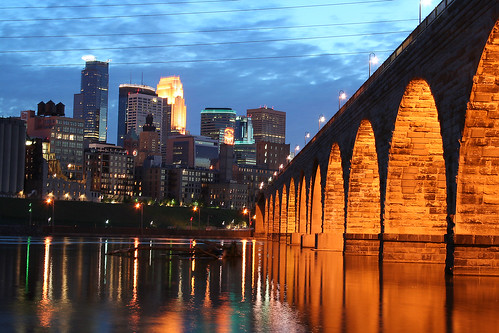
 I would like to wish all my friends and family back home a very happy and safe 4th of July. While I will not be watching the fireworks displays from the Stone Arch Bridge, one of my favorite places in Minneapolis, Maggie and I are planning to honor the holiday instead by hiking up Monserrate on Saturday and having a super-deluxe-cheeseburger and malt at a nearby "burger joint." Aside from finishing up a few work projects, I may even celebrate tonight by watching the Twins-Yankees game on ESPN2. Go Twins!
Tuesday, July 3
A quick update from Bogota
The past week has been pretty hectic, however I wanted to take a moment just to say that everything here is going well. My work has been quite busy and as a result I have not been able to offer updates as often as I would like. That said, here is a quick summary of my recent activities.
I have been working on the design of an interdisciplinary support program for families attending exhumations and reburial ceremonies. IOM has been requested to assist the Attorney General Office in organizing a reburial ceremony that will take place in northern Colombia at the end of July. Therefore, my work entails organizing the event and developing a budget for the activities that we have planned. This program will then be used to create a nationwide plan for future exhumations and reburials.
I am currently researching exhumations and reburial ceremonies in Guatemala and I am learning about the services provided to the family members attending these events and the ways in which they were funded. My findings will then be used to write a project proposal that will be given to international funders in the hope that they might provide financial assistance to the Colombian government to conduct exhumations and reburials throughout the country.
Aside from this project proposal I have also been asked to write a brief summary of the most important aspects and components of reburial ceremonies which I will deliver to the prosecutor's office later today. I have also been asked to translate an eight-page document from English to Spanish. Without a doubt, these activities will keep me occupied for the next day or two.
That is all for now. Stay tuned for more updates!
Monday, July 2
Tragedy strikes Colombian lawmakers
 Last week while I was putting the finishing touches on a project for work and soccer fans were lamenting Colombia's 5-0 drubbing by Paraguay in the 2007 America's Cup soccer tournament, Colombians were reeling from news that 11 regional lawmakers held hostage since 2002 by the FARC had been killed.
The government accuses the FARC of murdering the deputies, while the FARC claims that they were killed during a botched raid by the military. What is certain is that the deputies were killed under very murky circumstances.
On Saturday, President Uribe responded to a request by France, Spain and Switzerland for an international probe into the killings by accusing them of comparing his administration with its Marxist guerilla enemy. He stated that “the government cannot accept statements from three European delegates that put us on an equal level, that measure the FARC and the government by the same standard.” He added, “We will not accept such disrespect for our democracy as putting the government at the same level as the terrorists of the FARC.”
The President’s fiery speech on Saturday was followed by much more subdued comments on Sunday when Colombian officials announced that they would be investigating whether the 11 lawmakers were killed by stray gunfire during a botched rescue attempt by bounty hunters. The bounty hunters were apparently after the $2.5 million reward offered for each of FARC’s eight leaders. While officials initially dismissed these allegations, they are now considering all possibilities.
Sources: AFP (photo) and AFP, Reuters