By Joshua Goodman
BOGOTA, August 1 (Associated Press) - Looking to get more time off? Move to Colombia. Renowned for its war on drugs, paramilitaries, and guerrillas movements, this Andean nation also leads the world in public holidays with 18 each year. Second-place Slovenia has 16, while Slovakia, Cyprus and Chile have 15 each, according to a new study by Mercer Human Resource Consulting, which advises businesses in 42 countries. The United States has 10 federal holidays.
As overworked Americans bemoan their shrinking leisure time, a month rarely passes in Colombia without a three-day weekend.
Most of the holidays -- mandatory for both public and private-sector employees -- pay homage to Roman Catholic saints. But don't ask Colombians which ones. Most are blissfully ignorant of what allows them to pack their car trunks for the beach or mountains for yet another "puente," Spanish for "bridge" and Colombian for three-day weekend.
So much loafing around takes a toll on the economy. Every June, which can cram in as many as three "puentes" depending on the year, factory and business output ebbs even while workers continue to collect their regular pay. "There's no doubt this crushes productivity and increases costs for business," said Juan Carlos Echeverry, an economics professor at Andes University in Bogota. "But maybe it's the reason in survey after survey Colombians are always rated among the happiest people in the world."
Thursday, August 2
Colombia leads world in public holidays

Friday, July 27
The best (and worst) of Cartagena de las Indias
 On Friday, July 20th my friend Maggie and I traveled to the Caribbean coast where we enjoyed three days of exploring the city of Cartagena. Aside from a few inopportune rain storms, we had a great time basking under the Caribbean sun, wandering around Cartagena's charming colonial streets, dining at top-notch restaurants, and taking day trips to nearby tourist destinations. We especially enjoyed our excursions to the nearby "Islas del Rosario" and the very unusual "mud volcano."
We arrived to sunny Cartagena on Friday morning and spent the rest of the day exploring the Popa Convent, San Felipe Castle, and the fortress-like "old city" of Cartagena . In the afternoon we had an incredible meal at an authentic Spanish-style restaurant called "El Burlador de Sevilla" and had dinner at an Argentinian pizza place later that evening. We wrapped up our first night in Cartagena with cocktails at the posh Santa Clara Hotel.
A visit to the "mud volcano" On Saturday morning we woke up early and took a tour of a nearby "mud volcano." There we covered ourselves from head to toe in thick, gray mud and enjoyed the "services" of local "massage therapists." Following our massages, we were instructed to walk down a dirt path to a smelly lagoon where local women washed the mud off our mud-caked bodies and swimsuits. Sounds weird, right? Well, it was! It was certainly one of the most unusual (and unforgettable) experiences that I have ever had. Later that night we treated ourselves to "arequipe" ice cream and had a delicious meal at the super-chic Santísimo Restaurant.
 Islas del Rosario
On Sunday morning we went to the Cartagena harbor and took a boat to the Cocoliso Resort, located about two hours southwest of Cartagena on one of the 27 Rosario Islands (Islas del Rosario). Unfortunately, it stormed during the 2-hour trip there and cleared up only a couple of hours before we had to return to Cartagena. However, before leaving the island I was able to enjoy a quick swim in the Caribbean and snap a few pictures of flowers, coconuts, and of me and Maggie dressed as pirates! And fortunately, clear blue skies made for an absolutely beautiful trip back to Cartagena.
On Sunday night, Maggie and I were having dinner and decided to make a list of the some of the most memorable aspects of our trip to Cartagena. Just for fun we included both the best and the worst of our trip.
The best (and worst) of Cartagena
 Best Meal
+Appetizers of cured ham (jamón serrano) and manchego cheese followed by a grilled seafood platter. The restaurant was an authentic Spanish restaurant that reminded me of the time that I spent living in Spain. The entire experience, including the décor, the music, the smells emanating from the kitchen, and the perfectly prepared portions of shrimp, octopus, squid, clams, oysters, and lobster brought back fond memories of the food that I loved to eat when I was studying in Santiago de Compostela. Worst Meal
+Deep-fried chicken leg accompanied by a so-called salad of onions prepared in a hygienically "questionable" hut on the beach. (Maggie)
+Fried fish (shown in picture) from the same hygienically-challenged hut. (Aaron)
Disclaimer: The rice served with our chicken and fish was actually quite delicious. It is called "arroz con coco" or coconut rice and is a specialty of northern Colombia. The rice is prepared with shredded coconut and is cooked in coconut milk rather than water. I liked the fish (mojarra) too, but in comparison to the other five-star meals that we enjoyed in Cartagena, this one won the prize as the "worst meal." Best Dressed
+Maggie in her "slimming" red dress.Worst Dressed
+The plump woman wearing a thong bikini at the pool.
+Honorable mention: The plump elderly man wearing a thong bikini at the pool.
Note to readers: "Spandex is a privilege, not a right." - CamilleBest Picture
+Maggie (again) in her red dress (she likes this picture so that's why it gets two nods).Worst Picture
+The image that I have burned into my head of that man wearing a thong bikini. (Aaron)
Disclaimer: I made this part up. The guy was actually wearing a speedo, but I thought that it would be more funny if he were in a thong. Best Deal
+Once I had made the trek from the mud volcano down the dirt trail to the edge of the stinky lagoon, a friendly woman named Graciela took me by the hand and led me out into knee-deep water and told me to sit down. There my toothless helper washed my hair, face, ears, torso, legs, and feet. She then told me to take off my swimsuit. I was quite surprise and confused. "¿Qué? What is it that you want me to do?" Once I was sure that I had understood her correctly, I reluctantly did as she asked. Fortunately, she simply wanted to wash off my swimsuit. After a few minutes, Graciela finished scrubbing my suit and told me that I was completely clean and ready to go. Price: $1.00 (Aaron)
+Honorable Mention: One of our taxi drivers insisted on taking us around the old city of Cartagena and showing us the major sites. We thanked him for the offer but declined since we were already quite tired from a full day of sightseeing. Honestly, we just wanted to get back to our air-conditioned hotel to rest. Then he lowered his asking price from 5 to 3 dollars and continued to insist that we take him up on this once-in-a-lifetime offer. However, we were still unconvinced. After several minutes our driver finally gave up. In the end it turned out that the destinations that he was planning on taking us to were on the route to our hotel so we ended up getting the tour anyway! Price: Free
And finally,Worst Deal
+The 15-minute taxi ride to the Popa Convent. I think we got the "special" price for foreigners. Price: $20.00!
That's all for now. Be sure to check out the rest of my pictures from Cartagena!
Wednesday, July 25
Remains of 25 individuals returned to their grieving families
 On Monday morning I woke up at 4 o'clock. And by five o'clock I had already showered, dressed, packed my suitcase, and started my three-hour journey from Cartagena along the Caribbean coast towards the city of Santa Marta. Under the cover of darkness, my taxi driver Roberto and I traveled along desolate highways past one slumbering village after another. And every few miles we came to heavily guarded military checkpoints and I was tempted to ask Roberto how safe the highways were at that time of the morning. In my head I wondered about the best way to ask the question. "Is it safe to be out here?" Or, "How do you feel about driving in the dark?" Or maybe, "Is this really a good idea?" After several minutes of formulating the question in my head I decided to just remain silent. I figured that he might not understand the point of my question. Or maybe I was just afraid to know the answer.
As the sun slowly began to rise we sped along in our air-conditioned Renault past farmers riding atop donkeys carrying produce to the market. We raced alongside sandy beaches and towering groves of palm trees and past silent fishermen as they paddled out to sea in their wooden canoes. My eyes felt heavy and my mind wandered to the ceremony that would take place in just a few hours.
So I picked up my pen and notepad and began writing down a few of my thoughts. I wrote some of the questions that I hoped to ask the family members attending this historic event. I wondered how best to ask about the deaths of their loved ones and the deeply personal significance of receiving their remains after so many years. I wanted to learn from their experiences but worried that my questions would be perceived as being insensitive, intrusive, or just simply inappropriate for such a solemn moment. I wondered about what I would ask...
So, where are you from? How was your trip? What do you do for a living? How long ago did your loved one die? How did it happen? Were you able to attend the exhumation? Would you have liked to attend if given the chance? Did the authorities help you to understand the exhumation process and how the remains would be identified? Do you feel safe enough to return to your community? Do you worry that participating in this event might affect the safety of your family? What's next for you and your family?
 At 8 o'clock we finally arrived to the majestic San Pedro de Alejandrino estate where the ceremony was set to begin an hour later. After changing into my suit and tie I sat under the big white tent and waited. There I started to talk with a some of those in attendance and I asked them a few of my questions. I met one young woman whose husband was killed by the paramilitaries when he was just 24 years old. She was pregnant when he was killed and she was left to care for their two-year-old son. Three days after his death, she packed up her belongings and headed to the city where she hoped to escape the violence. In the 10 years since that day, she has been too afraid to go back to her village.
I also met a very kind, elderly woman from Valledupar. She lost two of her sons in the war, one to the side of the guerrillas and the other to the paramilitaries. She told me how they were "such good boys" and "very hard working." Killed just days apart, they were 33 and 24 years old at the time of their deaths. Then I asked her about the psychological support she had received during the previous two days.
"During the workshops, the psychologist asked us if we carried hatred or bitterness in our hearts towards those who took away our loved ones. And to be honest, I don't hate anyone. Not even those who stole my sons. Of course, I would like to see justice. But even if justice is never served here on earth, I know that they will eventually have to answer to God. Just as God has forgiven me for my past wrongdoings, He has given me the ability to forgive them. I am just looking forward to the day when I see my sons again once we are in heaven. I don't hate anyone."
 "It was a difficult and painful ceremony," stated Colombian Vice President Francisco Santos Calderón when referring to Monday's special event where the remains of 25 individuals were returned to their families. "They were innocent victims, killed because they refused to choose sides between the guerrillas and paramilitaries." The Vice President urged those in attendance to "teach the rest of us how to achieve peace and reconciliation in Colombia because only you who have suffered such great injustice can truly understand what it means to forgive."
Of those whose remains were exhumed and identified, 16 were men (including one 13-year-old boy) and 9 were women. Each had been killed 10 years earlier by guerrillas or paramilitaries and were recovered from four different unmarked graves in 2006. This was the second such ceremony held in Colombia since exhumations began in 2006.
One father's quest for peace
 Today I was reading about Gustavo Moncayo, the father of a military officer captured by the FARC and held hostage by the guerrillas for the past 10 years. Accompanied by his daughter Tatiana, Moncayo has been walking across Colombia since mid-June in the hope of encouraging the government to reach a "humanitarian agreement" with the FARC. The agreement would imply the release of FARC prisoners in exchange for hostages held by the guerrillas. Here you can follow Gustavo's journey (in Spanish) and see pictures of his quest for peace.
The following story is from Gustavo's blog:
"Yesterday as we arrived to Chicoral, a man handed me a white dove. I took it into my hands and then I said a few words. The strange thing is that when I opened my hands to let it fly away, it just sat there without moving. I didn't want to move or bother the bird, but it eventually perched on my outstretched index finger. I gave the dove to Yuri to care for it. If I am not mistaken, a little girl ended up with it.
We did have a few problems upon arriving to Chicoral because there weren't places for us to sleep. Thanks to God and to the kindness of the Colombian people, a six-year old girl came out of nowhere and suggested that I stay in her house, in her room, and in her bed. It was there that I was reminded of how I used to dress Pablo Emilio and watch him sleep. I am feeling a deep pain in my body and the urge to cry.
I had better conclude by saying that we are close to Espinal and tomorrow we leave for Flandes. Step by step we will reach our goal: Freedom." (July 23)
The following story comes from Shadows of War by Carolyn Nordstom and is about an anonymous poem entitled "True Peace" that was found taped to a wall in London in 2001, the day after a bomb exploded outside the BBC building and tensions were escalating in Northern Ireland.
"There once was a King who offered a prize to the artist who would paint the best picture of peace. Many artists tried. The King looked at all the pictures, but there were only two he really liked and he had to choose between them.
One picture was a calm lake. The lake was a perfect mirror, for peaceful towering mountains were all around it. Overhead was a blue sky with fluffy white clouds. All who saw this picture thought it was a perfect picture of peace.
The other picture had mountains too. But they were rugged and bare. Above was an angry sky from which rain fell, and in which lighting played. Down the side of the mountain tumbled a foaming waterfall. This did not look peaceful at all. But when the King looked, he saw behind the waterfall a tiny bush growing in a crack in the rock. In the bush a mother bird had built her nest. There, in the midst of the rush of angry water, sat the mother bird on her nest.
The King chose the second picture as the winner. "Because," explained the King, "peace does not mean to be in a place where there is no noise, trouble, or hard-work. Peace means to be in the midst of all those things and still be calm in your heart. That is the real meaning of peace."
 This story reminds me of Gustavo Moncayo, the dove that refused to fly away, and the six-year old girl who offered to give up her bed to a complete stranger. It causes me to reflect on "peace" and how it is not spontaneously achieved at the moment of negotiating an end to hostilities, but is instead slowly cultivated through the simple acts of individuals working to create something positive in the midst of all the "noise" and "trouble." I am encouraged because despite finding themselves in the midst of a decades-long war, many brave and committed Colombian people like Gustavo Moncayo are working hard to build peace and a better future for their children.
I will conclude with this excerpt from Shadows of War:
Peace is not the resting pulse of humanity, reestablished the moment a peace accord comes into being. It is the pulse of humanity- but it does not rest: it is wild, erratic, fragile, sweet, and too often elusive. Peace is not merely the absence of formal war. It is a child free from the hungers of the twenty-first century; a woman free from fear of assault from either friend or foe; a man who no longer has to look with confusion at where his leg was just a moment before he unwittingly stepped on a land mine.
Peace does not wait for the end of war to make its debut. It takes its greatest definition on the front lines. As one war orphan living on the street told me during the years of war in Angola: I carry a little bit of peace in my heart wherever I go, and I take it out at night and look at it. Peace starts in the trader walking across the front lines to carry critical necessities to a town under siege; it starts in the teacher holding classes outside the bombed-out schoolhouse even though teachers are being targeted for attack; it starts in the songs and paintings of artists who envision ways to end the war; it starts in the belief for a better tomorrow amidst an unbearable today.
Photos from Camino de la Paz
Thursday, July 19
A quick trip to Santa Marta
 On Sunday afternoon, I will take a two-hour taxi ride from Cartagena northeast along the Caribbean coast to the city of Santa Marta. There I will be observing a ceremony that I have been helping to plan for the past several weeks. In addition to the families attending this funeral-like event, there will be several VIPs in attendance, including the Colombian vice president and several generals from the armed forces. Next week I will write more about my experiences at this historic event.
After the event on Monday morning, I hope to take a quick walking tour of Santa Marta before boarding my flight back to Bogota. Here is what one traveler says about Santa Marta on World66:
"You shouldn’t miss Santa Marta. There are so many reasons to come here: to relax, because the area has great beaches, to visit the oldest town of Colombia (founded in 1525!) or to explore the ancient culture of the Tayronas, who lived in the area before the Spanish came. The Ciudad Perdida or lost city of the Tayronas can be visited in a 5 day trek through a national park. This will be an experience you will never forget.
Santa Marta is also a very lively place with good nightlife. The clubs near the beach attract a colourful crowd.
Santa Marta is relatively secure. Crime rates are low and its streets are clean. El Rodadero (shown above) is the main touristic area. A place full of high-rises, shops, and cafés. The Annual Festival del Mar, or Festival of The Sea, brings many people.
Also, be sure to visit the Tomb of Simon Bolivar, El Libertador, alongside a wonderful art museum."
A seaside getaway: Cartagena de las Indias
 On Friday morning, I will take advantage of the long weekend attributed to Colombia's Independence Day (July 20) by traveling to Cartagena, the "Jewel of the Caribbean." I will take an early morning flight to this Spanish colonial city celebrated for its beautiful beaches and old world architecture. Here's what they say about Cartagena on World66.
"With just under 1 million inhabitants, Cartagena is the most popular tourist resort town in Colombia. It is divided into two main parts: the Ciudad Antigua (Old City) and the Ciudad Nueva (New City). Cartagena used to be a popular place for the privateers of the Caribbean (the most famous being Sir Francis Drake). Accordingly, the Spanish invested heavily in thick walls to protect this important harbour from attacks.
The walls are over 10km long and enclose the pleasant Ciudad Antigua, built in 1533 along a beautiful Caribbean harbor. It’s very pleasant to stroll down the narrow streets and take in the stylish colonial architecture. The cathedrals and palaces face cool shady plazas, where you can buy little cups of coffee (tinto) and watch the world go by. Around Cartagena some very fine beaches are to be found, where you can get a tan under the tropical sun.
Nightlife in Cartagena is quite lively, as there are a number of bars with good (Salsa) music and cheap beer. Finding a decent place to eat is never difficult, and restaurants specialize in Caribbean and creole dishes.
From Cartagena you can travel on to Bogotá, Cali, Medellín, and Santa Marta, a great old city on the coast, from which you can visit the Ciudad Perdida of the Tayrona Indians."
Photo by Carlos Hoyos
Wednesday, July 18
Green jacuzzis and fancy-pants spa treatments
 Last Saturday afternoon, I hopped on a bus to Paipa with nothing but a dance belt and a tube of chapstick. Just kidding. But I did take my backpack and traveled to this small town located approxiately 3 1/2 hours north of Bogota. Along with three of my friends, we traveled in search of Paipa's reputable hot springs and relaxing atmosphere. Once we arrived to Paipa, we climbed into a taxi which would take us the final five kilometers to our hotel. However, moments after speeding off in the taxi we found ourselves stuck behind a slow-moving caravan of semi-trucks. Apparently they were celebrating the holiday of some virgin that is supposedly the patron saint of truck drivers. Who knew that there even was a patron saint of truck drivers?!
Well, when we finally arrived to Hotel Paipa which is situated on the banks of Lake Sochagota, I was pleasantly surprised to learn that Maggie had booked us all in what appeared to be a five-star hotel. (She really knows how to pick the lodgings!) The remainder of the evening was spent enjoying dinner in the hotel restaurant and later admiring (from a distance) the greenish-colored Jacuzzis that looked more like churning cauldrons of vegetable beef stew. Let's just say that the large clumps of hair and numerous water-logged insects floating face down in the green water didn't enhance the "charm" of this otherwise luxurious hotel. On Sunday, me and the gang trekked down to the hotel spa where we enjoyed an hour-long full-body massage that included us getting covered from head-to-toe in mud, lathered up with oil, and intermittent layovers in the sauna and hot showers. Yeah, I know that getting a fancy-pants massage at a spa isn't considered to be very "manly," but I still have to admit that it was quite relaxing.
In the end, perhaps the most memorable part of our little excursion to Paipa was the mud massage and the sight of that overly affectionate couple that just never seemed to leave the green Jacuzzis.
Photos by Paipa Hotel
Friday, July 13
Best (and worst) snack
 This is bocadillo and it might just be the most delicious snack ever invented. It is a typical Colombia sweet make from panela (sugar cane) and guava paste and comes nicely wrapped in banana leaves. The taste of bocadillo is very sweet and the texture reminds me of the fruit roll-ups that my mom would put in my lunch as a kid. Aaah, the memories.
However, besides the obvious hazard of overindulgence, bocadillo is also perhaps the worst snack ever, or at least when there are tiny, black beatles crawling around inside the banana leaf wrapper. That happened to me the other day and the unpleasant experience ruined what had previously been a happy love-affair with this Colombian confection.
Dining out in Bogota
La Hamburguesería On Sunday, several of us got together for burgers at La Hamburguesería in the Parque de la 93 in honor of the 4th of July. I brought my friend Sofía and Maggie brought along Paula ("the crazy Spaniard") and her friend María Victoria ("the quiet human rights lawyer"), Shane ("that nice guy from New Jersey"), Ivan ("the man"), a mother and daughter duo ("las artistas"), and Liz ("Cali girl"). Paula was super hungry and I was worried that she might eat the waitress. Maggie made sure that she didn't. And María Victoria reminded us that eating the waitress would be a grave violation of international human rights law.
Juan Valdez versus Starbucks After downing our burgers we wandered over to Juan Valdez Café, a favorite "watering hole" of ours in the Parque 93. Juan Valdéz is a ubiquitous coffee chain that makes a mean "café con leche." While this chain is Colombia's answer to Starbucks, I just don't see them overtaking Starbucks anytime soon. I mean, just look at the sizes of their drinks. At Starbucks, the sizes are Tall (12 oz.), Grande (16 oz.) and Venti (20 oz.). In contrast, the sizes at Juan Valdez are Pequeño (7 oz.), Mediano (9 oz.), and Grande (12 oz.). To maintain his or her daily intake of caffeine, a Starbucks addict would likely go crazy if suddenly transplanted in the land of Juan Valdez.
Tuesday, July 10
Video: Climbing Monserrate
On Saturday, my fearless friend Maggie and I hiked up Monserrate. Here you can watch a video of our adventure.
Thursday, July 5
Video: A call for peace and freedom
 While the number of kidappings each year in Colombia has greatly declined in the past few years, today at 12 o'clock the country came to a standstill as over a million people flooded the streets to demand an end to the armed conflict and freedom for the men, women, and children that are still being held hostage by the FARC and other illegal armed groups. There are currently more than 3,000 individuals held in captivity, including some for over nine years.
These demonstrations are the largest since October 1999 when an estimated 5 million Colombians joined in a nationwide protest against violence and kidnappings. While these marches are considered smaller than the events of 1999, others point out that Colombia has never experienced such a widespread and inspiring call for peace since they have successfully mobilized the citizens of not only Bogota but of every major city and town of Colombia.
"This march is by the people of Colombia against violence and against indifference," said Fabiola Perdomo, the widow of one of the 11 local politicians killed by the FARC in June. "The armed groups, the government, the rebels, must look for another solution apart from more war."
Here is a video that I put together of today's demonstrations in northern Bogota.
The calls for peace have begun
 Today is considered by many to be a historic day for Colombia in its struggle to overcome violence. At noon, millions of Colombians will raise their voices, drivers will honk their horns, and churches will ring their bells in unison to demand peace and the release of individuals currently held hostage by guerrillas and paramilitaries.
Massive demonstrations, parades, and vigils are planned in cities across the country. In Bogotá, citizens will form human chains, clogging Bogota’s main transportation routes. In Cali, the mayor has called on every citizen to don white clothing and to carry white lilies as they head to the streets. In Medellín, the mayor has called on the citizens to their everyday activities and join together in making as much noise as possible, using any means necessary including the banging of pots and pans. On the coast, ocean-liners and cruise ships will sound their horns in opposition of the violence. Vigils are also being held in France, Argentina, Belgium Bolivia, Spain, New York, Canada, Costa Rica, Chile, Ecuador, El Salvador, Brazil, Jamaica, Venezuela, Nigaragua and Poland.
I share the hope of millions of Colombians that these demonstrations will be peaceful and contribute to the release of the 3,143 individuals currently held hostage in Colombia.
Wednesday, July 4
Human chain planned in Bogota
 The following announcement is for an event planned in Bogota. Organizers have planned the activity in response to the recent deaths of 11 regional lawmakers who were kidnapped in 2002 and died recently while held in captivity by the FARC.
"On Thursday, July 5 at 12 o’clock noon, Bogota will come to a stop as a symbolic demonstration rejecting the use of kidnappings.
At noon, drivers will honk their horns and churches will ring their bells for five minutes. Everyone – including public and private transportation, government officials, office workers, students, business people, homemakers, pedestrians – will stop our activities. 1,268 people have died in captivity. We cannot remain indifferent: Let us unite against the use of kidnapping and in support of the release of all kidnapping victims and the release of the remains of the 11 former regional deputies.
We plan to gather from 11:00 a.m. in the Plaza de Bolívar. At this time we will also begin joining hands along Seventh Avenue (towards the north) with the goal of making the longest human chain possible. May our hands be united in opposition to the use of kidnapping. The Office of the Mayor of Bogota invites local leaders to head up this effort in his or her area."
In related news, a video released on Tuesday showed seven Colombian soldiers and police officers held hostage by FARC rebels for as long as nine years as they appealed for the government to reach a deal with their guerrilla captors to win their release. It was the first time in over four years that the families received news of the hostages.
Happy 4th of July
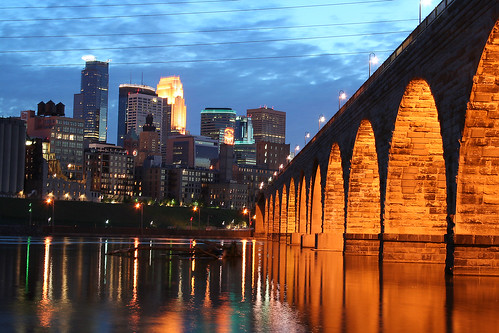
 I would like to wish all my friends and family back home a very happy and safe 4th of July. While I will not be watching the fireworks displays from the Stone Arch Bridge, one of my favorite places in Minneapolis, Maggie and I are planning to honor the holiday instead by hiking up Monserrate on Saturday and having a super-deluxe-cheeseburger and malt at a nearby "burger joint." Aside from finishing up a few work projects, I may even celebrate tonight by watching the Twins-Yankees game on ESPN2. Go Twins!
Tuesday, July 3
A quick update from Bogota
The past week has been pretty hectic, however I wanted to take a moment just to say that everything here is going well. My work has been quite busy and as a result I have not been able to offer updates as often as I would like. That said, here is a quick summary of my recent activities.
I have been working on the design of an interdisciplinary support program for families attending exhumations and reburial ceremonies. IOM has been requested to assist the Attorney General Office in organizing a reburial ceremony that will take place in northern Colombia at the end of July. Therefore, my work entails organizing the event and developing a budget for the activities that we have planned. This program will then be used to create a nationwide plan for future exhumations and reburials.
I am currently researching exhumations and reburial ceremonies in Guatemala and I am learning about the services provided to the family members attending these events and the ways in which they were funded. My findings will then be used to write a project proposal that will be given to international funders in the hope that they might provide financial assistance to the Colombian government to conduct exhumations and reburials throughout the country.
Aside from this project proposal I have also been asked to write a brief summary of the most important aspects and components of reburial ceremonies which I will deliver to the prosecutor's office later today. I have also been asked to translate an eight-page document from English to Spanish. Without a doubt, these activities will keep me occupied for the next day or two.
That is all for now. Stay tuned for more updates!
Monday, July 2
Tragedy strikes Colombian lawmakers
 Last week while I was putting the finishing touches on a project for work and soccer fans were lamenting Colombia's 5-0 drubbing by Paraguay in the 2007 America's Cup soccer tournament, Colombians were reeling from news that 11 regional lawmakers held hostage since 2002 by the FARC had been killed.
The government accuses the FARC of murdering the deputies, while the FARC claims that they were killed during a botched raid by the military. What is certain is that the deputies were killed under very murky circumstances.
On Saturday, President Uribe responded to a request by France, Spain and Switzerland for an international probe into the killings by accusing them of comparing his administration with its Marxist guerilla enemy. He stated that “the government cannot accept statements from three European delegates that put us on an equal level, that measure the FARC and the government by the same standard.” He added, “We will not accept such disrespect for our democracy as putting the government at the same level as the terrorists of the FARC.”
The President’s fiery speech on Saturday was followed by much more subdued comments on Sunday when Colombian officials announced that they would be investigating whether the 11 lawmakers were killed by stray gunfire during a botched rescue attempt by bounty hunters. The bounty hunters were apparently after the $2.5 million reward offered for each of FARC’s eight leaders. While officials initially dismissed these allegations, they are now considering all possibilities.
Sources: AFP (photo) and AFP, Reuters
Tuesday, June 26
Pablo Escobar: Violence, Cocaine, and Wealth
Written by Maggie Sullivan Pablo Escobar: violence, cocaine, and wealth. These are the first words that come to mind when I think about the man who was named seventh-richest in the world by Forbes magazine in 1989 and who was considered by many to be the most brutal drug kingpin until his death on December 2nd, 1993.
In the late 1980s, American law enforcement and intelligence organizations were involved in a major initiative with Colombian authorities to track down and bring to justice Medellin cocaine trafficker Pablo Escobar. I just finished reading “Killing Pablo” by Mark Bowden, a book that recounts this game of cat and mouse involving both the Colombian and US governments.
I was surprised to read that contrary to popular belief, Escobar did not actually offer to pay off the Colombian debt of $10 billion in exchange for a pardon by the government. This is not to say that he did not bribe his way through Colombia, paying officials to look the other way whenever he shipped cocaine out of the country and convincing the government to let him build his own prison complete with a Jacuzzi, big screen televisions, and a bar.
And while Pablo Escobar did become one of the world’s most wanted man by both the Colombian and US governments, he was also very well-liked in his hometown of Medellín. He cultivated his Robin Hood image by supporting the construction of homes for the poor, sports complexes, and other community restoration projects.
As time passed, the cocaine industry grew and generated much greater profits. At one point Escobar might have been able to "make amends" with the Colombian government, however he eventually became deeply involved in an industry that ultimately led to the outright declaration of war between the Colombian government and the Medellín cartel. And as previously mentioned, the US played a significant role in this war. The US government, including the Central Intelligence Agency, Drug Enforcement Administration (DEA), and the State Department played a crucial role in the pursuit of Pablo Escobar by providing the Colombian government with training, equipment, and intelligence.
Whether or not US officials were present when Escobar was killed is still a matter of debate. However, what is certain is that US support played an undeniably important role in the search and assassination of Pablo Escobar.
The decline of the Medellin Cartel and rise of the Cali Mafia
So what did Escobar’s death signify for the cocaine industry? Did it result in the end of the so-called "war on drugs?" The answer is no. Instead, it signified the death of the Medellín cartel. And rather than destroy the Colombian cocaine industry, Escobar’s death merely shifted the balance of power from the Medellin Cartel to the Cali Mafia and it increased involvement of the paramilitaries (a.k.a. "death squads") in the cocaine business. Few would argue that Escobar’s death ended the “drug war.” Instead, most would argue that it simply shifted the major players of the game.
Maggie Sullivan is a second-year MALD student at The Fletcher School and is focusing her studies on Development Economics and International Monetary Theory. She is currently in Colombia doing an internship with the United Nations Office on Drugs and Crime (UNODC).
Friday, June 22
The Legacy of Truth: The Impact of Transitional Justice
 On Wednesday, I had the opportunity to attend a regional conference entitled The Legacy of Truth: The Impact of Transitional Justice on the Building of Democracy in Latin America. At the conference, I was able to hear experts discuss transitional justice and the challenges facing the peace and justice process in Colombia. In general terms, transitional justice refers to "a range of approaches that societies undertake to reckon with legacies of widespread or systematic human rights abuse as they move from a period of violent conflict or oppression towards peace, democracy, the rule of law, and respect for individual and collective rights."
Panel topics included:
- Contributions of transitional justice in the building and strengthening of democracy;
- The role of truth commissions as catalysts for social inclusion;
- The contribution of criminal justice prosecutions in strengthening the rule of law;
- Demobilization processes and their influence on the rule of law, local reintegration, and citizen security;
- The future of political and social reconciliation: Rebuilding social cohesion and civilian confidence.
Speakers and panel moderators included the Vice President of Colombia, the Attorney General, ambassadors from Argentina, France, Switzerland, Peru, Mexico, and Chile, the President of the Colombian Reconciliation and Reparations Comission (CNRR), and numerous experts on transitional justice. I was especially excited to attend a lecture by Carlos Martin Beristain, a highly regarded expert on mass grave exhumations and psychosocial support for victims of political violence and "natural" disasters.
Since Wednesday's conference, I have been researching and writing a report that will provide recommendations to the Attorney General on "best" ways to return to relatives the remains of individuals exhumed from mass graves. This plan will outline several ways to meet the diverse needs of relatives attending such ceremonies. To accomplish this, I have been researching how such ceremonies have been conducted in Guatemala, Peru, Rwanda, Bosnia, and Kosovo and I have put together a summary of many "best practices" and "lessons learned." My objective is to develop a pilot project that will be implemented during a ceremony in Santa Marta, Colombia at the end of July. At this ceremony the remains of 30+ individuals will be returned to their families, and if the pilot project goes well this plan could be used during future ceremonies throughout Colombia.
Friday, June 15
Winning the "War on Drugs"
Written by Maggie Sullivan Yesterday I had the opportunity to attend a press conference here in the United Nations Office on Drugs and Crime (UNODC) regarding the latest coca cultivation data. This conference was particularly interesting because of the perceived differences between the estimates of United States and Colombia regarding the (lack of?) progress on the “war on drugs.” The UNODC and Colombian Government’s official statistics show a reduction in total coca cultivation of 9%. However, the US numbers tell a different story: that there was no change in coca cultivation from 2005 to 2006. To explain this difference, it appears that the two governments have been using different methods to measure coca cultivation. According to Sandro Calvani, the representative here at the UNODC, there will be a meeting next week in Washington, D.C. in order to reach agreement upon setting a standard measuring method. In yesterday's press conference, Calvani emphasized the importance of international assistance in Colombia’s struggle against illicit drugs. This comes at a time when the US Congress has decided to change the direction of the aid package.
Regardless of whether total coca cultivation in Colombia has decreased, it has increased in Peru and Bolivia – which also means that the world supply remains unchanged. This is also called the “balloon effect.” The overall cultivation level does not really decrease, but rather it changes directions, similar to what happens when you squeeze a balloon.
Economic theory applies: as long as there is market demand, there will be supply.
Maggie Sullivan is a second-year MALD student at The Fletcher School and is focusing her studies on Development Economics and International Monetary Theory. She is currently in Colombia doing an internship with the United Nations Office on Drugs and Crime (UNODC).
Gay bombs, bad breath, and killer bees
 Here's an unusual story that I discovered today while reading the Colombian newspaper, El Tiempo. The U.S. Defense Department has apparently investigated building a "gay bomb," which would make enemy soldiers "sexually irresistable" to each other and deliver a "lethal blow" to troop morale. Other unique and non-lethal weapons included one that would give soldiers bad breath, and yet another would attract swarms of enraged wasps or angry rats towards enemy troups. Apparently, plans were scrapped to build the "Who? Me?" device intended to simulate flatulence in enemy ranks because, "people in many areas of the world do not find fecal odor offensive, since they smell it on a regular basis."
Tuesday, June 12
In the Eyes of the FARC
-Sun Tzu, The Art of War
In order to understand the ongoing conflict in Colombia, we need to understand the complex and often enigmatic views of the Armed Revolutionary Forces of Colombia (FARC). And by improving their understanding of the FARC, government negotiators might be better able to achieve a negotiated prisoner swap.
Published in the Semana weekly magazine on June 10, the article entitled "In the Eyes of the FARC" (Spanish/English) offers a thoughtful reflection on some of the motivations behind this powerful movement. (Many thanks to Adam Isacson at the Center for International Policy for making this article available in English.)
The Importance of Understanding the Five "Core Concerns"
Whether we are negotiating a hostage exchange or simply deciding where to go for dinner, emotions can play an important role during negotiations. Fischer and Shapiro would recommend that Colombian negotiators study the FARC and strive to address their five "Core Concerns." The "Core Concerns" provide a way for us to understand the basic "human wants that are important to almost everyone in virtually every negotiation." And by focusing on these wants, negotiators can be more effective. The "Core Concerns" are appreciation, affiliation, autonomy, status, and role.
Appreciation is the desire we all have to feel understood and honestly valued. Mutual appreciation can increase the level of cooperation during negotiations.
Affiliation describes the sense of connectedness with another group or person. By recognizing the commonality between groups, negotiators can bridge the gap between the parties and enhance their ability to work together.
Autonomy refers to the "freedom to affect or make decisions without the imposition of other." Promoting autonomy is essential and requires that we also guard against impinging upon or interfering with the autonomy of others. When we impinge upon the autonomy of the other, we essentially take away their ability to make decisions independently.
Status refers to our perceived standing in comparison to the standing of others. Positive emotions can be fostered when our own status contributes to rather than detracts from our self-esteem. On the other hand, negative emotions can be generated through competition for status. Fischer and Shapiro point out that people tend to cooperate when there are more positive than negative emotions during negotiations.
Role describes the process of choosing a fulfilling role in the negotiation that satisfies your needs and standards of appreciation, affiliation, autonomy, and status.
This past week, President Uribe released dozens of FARC guerrillas from prison in an effort to stimulate the release of hostages held by the guerrilla movement. However, FARC leaders have vehemently rejected all offers of a unilateral government prisoner release, saying they would only negotiate a prisoner-for-hostage swap if the government created a demilitarized zone in two southwestern Colombian towns. In an interview with the so-called FARC "Chancellor," Raúl Reyes stated that the president's unilateral decision was viewed positively, "just as long as it is done without any conditions, any pressure, or any tricks." This sounds a lot like the FARC leadership is trying very hard to assert their autonomy, doesn't it?
To learn more about the "Core Concerns", you might pick up a copy of Beyond Reason: Using Emotions As You Negotiate by Roger Fischer and Daniel Shapiro. Or, you might like to check out this concise summary written by Hollie Hendrikson.
Monday, June 11
Chicaque Nature Reserve
 On Sunday, I went with my friend Angie and her 7-year-old daughter Meily to the Chicaque Nature Reserve. Located approximately 45 minutes west of Bogota, Chicaque is a high-altitude cloud forest that is home to hundreds of plant and animal species, including more than 200 species of birds, 17 types of orchids, hares and rabbits, two-toed sloths, long-tailed monkeys, and bobcats. The reserve has over 15 kilometers of nature trails, seven forest habitat-types, and several waterfalls including one that is over 230 feet (70 meters) high. The park also offers a variety of amenities that include a hotel, a restaurant with great food and service, guided tours, horseback riding, and camping.
My friends and I spent the day at Chicaque by ascending and descending more than 15 kilometers of steep, rugged trails. And because we had started our hike somewhat late in the day we ended up running out of daylight. Deep in the heart of the forest and exhausted from the five hours already spent hiking, we climbed out of the park in nearly complete darkness. Fortunately, Meily was quite a trooper as she lead the way almost the entire day (except for the last half mile that I carried her on my back).
The above map of Chicaque shows the trails and points of interest that we passed during our 10-12 mile hike. We started at the park entrance (point A) and hiked down to the scenic overlook (point B). Then, we continued down into the valley to the hotel and restaurant (point H) where we had lunch. Following lunch, we ventured off on a two-hour hike to the waterfalls (point J) and once there we found ourselves running out of daylight. Not good! So, we quickly headed towards the park entrance. However, by the time we reached point H, we had only the stars to light our way! Once we reached the park entrance (point A) we still had 1.9 miles of walking to reach the main highway where we were relieved to catch a bus back to Bogota.
Despite the nerve-racking final hours stumbling around in the dark, yesterday was definitely a memorable time spent enjoying the outdoors.
Friday, June 8
"The best Plan Colombia ever"
There's hardly a dull moment when it comes to Colombian politics. First, this week President Uribe has been working to free from prison approximately 150 members of the FARC (see #35), a leftist insurgency determined to overthrow the Colombian government. Second, the U.S. Congress is debating a proposal to alter the way foreign aid is given to Colombia. The goal of this new proposal is to create the best Plan Colombia ever.
What is Plan Colombia?
Since 2000, the United States has provided anti-drug and anti-terrorism support to the government of Colombia through "Plan Colombia" at an expense of over $5 billion. The aid package has primarily consisted of military aid and drug-eradication assistance (80%) in addition to funding for humanitarian assistance (20%). This week, Congress has proposed reducing the percentage of military assistance to approximately 65% and increasing the level of humanitarian aid to 35%. The new Plan Colombia would increase aid for much needed alternative development projects as well as for programs intended to promote democracy, assist communities displaced by the conflict, and help demobilize paramilitaries and guerrillas.
Why the change of heart?
This new stance by Congress appears to be connected to two recent and unsavory revelations: First, a recent White House report suggests that Colombia is not actually winning the "war on drugs." According to a report released by the White House this week, coca production has increased steadily over the past few years despite massive (and expensive) efforts to eradicate the illicit crop used for the production of cocaine. Second, recent reports also suggest that President Uribe and his administration have maintained close ties with the United Self-Defense Forces of Colombia (AUC), an illegal armed group that appears on the U.S. State Department's list of foreign terrorist organizations (See #42).
Colombia's "Narco-Bubble"
Over the past year, the Colombian peso (COP) has increased in value more against the U.S. dollar than any other currency in the world. President Uribe argues that Colombia is winning the war on drugs, pointing out that the country has dismantled paramilitaries, weakened guerrillas, and reduced the narco-economy, however economic indicators tell a different story. The growing strength of the COP has seriously hurt the country’s exports and job market. And despite Uribe's claims of winning the drug war, the Financial Times reports that the steady rise in the peso is due to a massive influx of dollars from narco-trafficking.
The "new" Plan Colombia
In my view, the "new" Plan Colombia will directly assist those working to strengthen the Colombian peace process. First, funding for alternative development projects is needed by those whose primary source of income comes from the cultivation of illicit crops. Without these crops, many have no other livelihood options and therefore are resistant to giving up this guaranteed source of income. Second, the new Plan would provide much needed funding support for Colombia’s strained judicial system. The system currently burdened by the task of investigating and prosecuting thousands of demobilized paramilitaries and guerrillas. The funding would permit the hiring of much needed judges, prosecutors, and investigators to prosecute those individuals bearing the greatest responsibility for serious violations of international humanitarian law.
Based on my recent conversations with the prosecutors office, investigators conducting exhumations often are forced to take public transportation (taxis and buses) to the grave locations because they lack vehicles of their own. These are often in isolated areas controlled by paramilitaries or guerrillas where the security situation tends to get "a bit complicated." The fact that investigators must resort to using public transportation exposes them to greater security risks that could be mitigated by having access to their own private vehicles. It appears that the new Plan Colombia will provide much needed financial support for such purchases.
Tuesday, June 5
A solemn day in Bogota
Monday morning I received a phone call from Catalina, a co-worker of mine from IOM. She called to let me know that we had been invited to attend a funeral-like ceremony known as an entrega de restos. During the entrega de restos, government officials returned the remains of four deceased individuals to their respective families. The four individuals had been murdered by paramilitaries and were discovered in November 2006 in a mass grave outside of Bogota. Since November, the national police and forensic investigators had worked to identify the individuals and determine their cause of death. On Monday, the families of the deceased were able to receive the remains of their lost loved ones and take steps to provide them with a dignified burial.
Before heading to yesterday's ceremony I had the opportunity to meet with the Attorney General of Colombia. I was especially impressed by his concern for the victims and their families. I was actually quite impressed by all of the officials who spoke yesterday and their commitment to the victims' families. For this reason, I have been asked by the District Attorney to work along with the Special Prosecutor for Exhumations to design a program that ensures that families receive the proper attention and support during upcoming entrega de restos ceremonies.
In addition to contributing to promoting the emotional recovery of the family members, a good argument could be made that exhumations strengthen the Colombian peace process. Such investigations expose the horrible atrocities committed by paramilitaries and guerrilla movements and I suspect that they might serve to undermine the support these groups receive from local communities. Illegal armed groups rely on various sources or "pillars" of support that include the authority or legitimacy granted to them, access to human resources and skills, supplies, and control over sources of knowledge and information. Without these important sources of material and logistical support, I suspect that armed groups would find themselves in a precarious situation and could be forced to negotiate a peace accord with the Colombian government.
New digs in Bogota
 On Saturday, I moved out of the Hotel Falcon and into my new apartment. I'll be sharing the apartment with my friend (and classmate) Maggie who is here in Colombia doing an internship with the UN Office on Drugs and Crime.
Located in Northern Bogota, our two-bedroom apartment is just a five-minute walk from my office and blocks from the Parque de la 93. It includes a spacious living room, two baths, a kitchen, hardwood floors, and lots of windows.
The neighborhood surrounding our apartment has numerous businesses, including shops, boutiques, cafes, and bars. This upscale residential area also includes several embassies, consulates, and shopping centers.